Helping Backyard Birders since 2021!
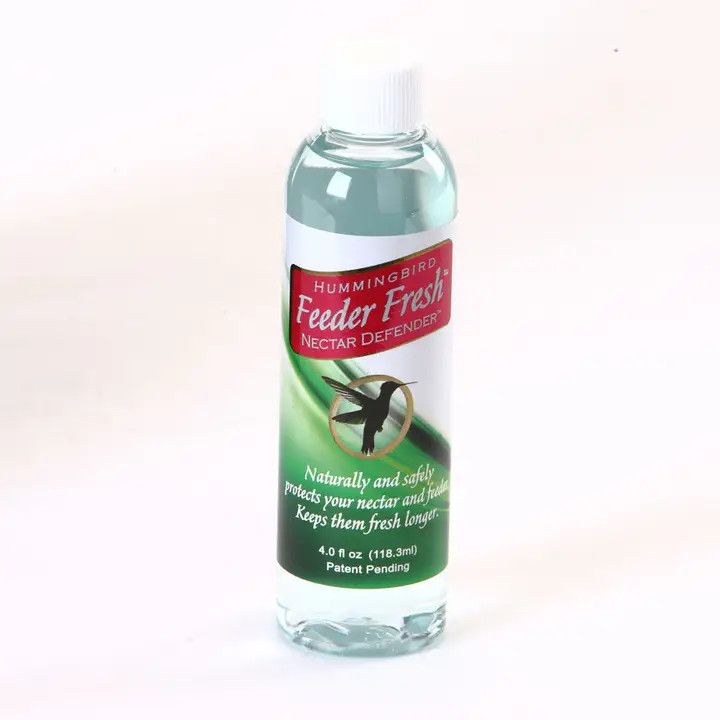
NECTAR DEFENDER 4oz Bottle single
$7.99
In stock: 20 available
Product Details
UPC: 811024001092
Brand: Sapphire Labs
Protect your nectar for weeks with this all-natural product that keeps hummingbird nectar fresh and prevents spoilage.
Key Features:
- Natural Protection: Works using a micronutrient naturally consumed by hummingbirds in their diet of nectar and insects.
- Easy to Use: Simply add a small amount to your current nectar.
- Long-Lasting: One 4 oz. bottle lasts an entire season.
- Safe and Chemical-Free: Contains no artificial preservatives or dyes. Safe for use around children, birds, and pets.
Product Details:
- Shipping Dimensions: Approximately 5.4" x 1.5" x 1.5"
- UPC: 811024001092
- Weight: 0.5 lbs
From the manufacturer's website https://sapphirelabs.com/is-nectar-defender-safe/
- Hummingbirds naturally consume micronutrient copper in their daily diet of insects and nectar. It is something they must have for their normal growth and development.
- Nectar Defender is well within the natural range of copper found in a wild hummingbird’s diet. The arthropods that hummingbirds eat can be many times the copper level found in Nectar Defender. And, the copper level of Nectar Defender combined with arthropods is still substantially within a hummingbird’s natural nutrient range.
- Micronutrient copper has been proven to be safe for hummingbirds in long-term dietary studies conducted by University of California Avian Scientists, and at zoo and wildlife rehabilitation organizations, to successfully maintain the long-term health of their hummingbird colonies for years at a time.
- To ensure the safety of Nectar Defender, the amount of micronutrient used is below the level tested in these long-term studies, and below the level recommended by the Association of Avian Veterinarians.
- The safety of Nectar Defender has been approved by avian and animal scientists at major universities and other hummingbird experts.
- In a real-world situation, hummingbirds will have multiple sources of natural flower and feeder nectar. As a result, when using Nectar Defender, the actual level of copper in their diet will likely be even less than the drinking water standard.
- Hummingbirds are protected from absorbing more copper than they need due to their bodies’ natural biochemical regulation. Birds have a robust system to precisely maintain a healthy copper balance (copper homeostasis). In fact, the copper from nectar will not even be absorbed in a bird’s digestive system unless it is in need of copper nutrient.
- Micronutrient copper will not accumulate in the hummingbird’s system. Any excess is rapidly excreted.
- The micronutrient copper used in Nectar Defender is the same mineral supplement that has been used for decades to provide essential trace minerals for birds. It is approved for this use by the FDA and USDA. It is safety rated by the FDA as GRAS (“Generally Recognized as Safe”), the safest rating given.
- Based on real-world preference testing, hummingbirds equally prefer nectar with Nectar Defender and standard nectar.
- Nectar Defender actually protects hummingbirds from nectar spoilage naturally up to 2 weeks, even in hot weather.
Safety Details:
Hummingbird feeders normally have to be cleaned and changed every few days. Lab and field testing have shown that the micronutrient copper in Nectar Defender will keep your nectar fresh for longer. To maintain a healthy feeder, we recommend cleaning it at least once every 2 weeks.(more if the temperatures are high)
Most people don’t realize that copper is a very common and ubiquitous element, naturally present in food, soil, and water. Copper has beneficial effects, and is something that all animals, including birds, must have for their normal growth and development. Hummingbirds naturally consume micronutrient copper in their daily diet of insects and nectar. For example, a mosquito, part of a hummingbird’s diet, has a copper content three times that of Nectar Defender. In truth, birds that do not consume an adequate level of copper encounter many serious health issues.
Long-Term Testing:
An official hummingbird nectar diet, containing a recommended level of micronutrient copper, was established by University of California Avian Scientists for the long-term maintenance of hummingbirds. The study provided protein-supplemented nectar containing 8 ppm copper (25 ppm dry basis) for 3 months to captive hummingbirds. This level of copper was selected by the researchers to satisfy the copper micronutrient requirement of hummingbirds. There were no reported signs of copper related problems or toxicities by the researcher, and the birds displayed their normal behavior of preening and singing.
(“Protein Requirements of Costa’s Hummingbirds Calypte costae”, Ann T. Brice and C. Richard Grau, Department of Avian Sciences, University of California, Davis, Physiological Zoolology 64 (2):611-626, 1991)
In another study, an official nectar diet containing 8 ppm copper (25 ppm dry basis) was created and used for the long-term maintenance of captive hummingbirds by University of California avian scientists. Anna’s and Costa’s hummingbirds were maintained on this diet for several years. On this diet and copper level, the hummingbirds thrived with no signs of problems. The birds molted normally and the males displayed singing. The birds ate the diet readily and they drank little supplementary water, from which it was concluded that the percentage of solids in the diet was not excessive. Birds were weighed routinely to confirm health, and body weights varied little over time. The researchers concluded that the hummingbirds’ acceptance of the diet and the health of the hummingbirds had provided a means to determine their requirements for nutrients. The diet has since been used by other zoos and wildlife rehabilitation organizations for the long-term maintenance other species such as Allen’s (Selasphorus sasin), black-chinned (Archilochus alexandri), and ruby throated (A. colibri) hummingbirds.
(Hummingbird Nutrition: Development of a Purified Diet for Long-Term Maintenance, A.T. Brice and C.R. Grau, Department of Avian Sciences, University of California, Davis, Zoo Biology 8:233-237 (1989))
Whole-diet hummingbird nectar products for the long term care of captive hummingbirds contains copper in the single digit ppm range as a micronutrient, so the acceptance that copper is needed near that nutrient level appears to be universal.
Save this product for later
Have questions?
NECTAR DEFENDER 4oz Bottle single
Powered by Lightspeed
Display prices in:USD